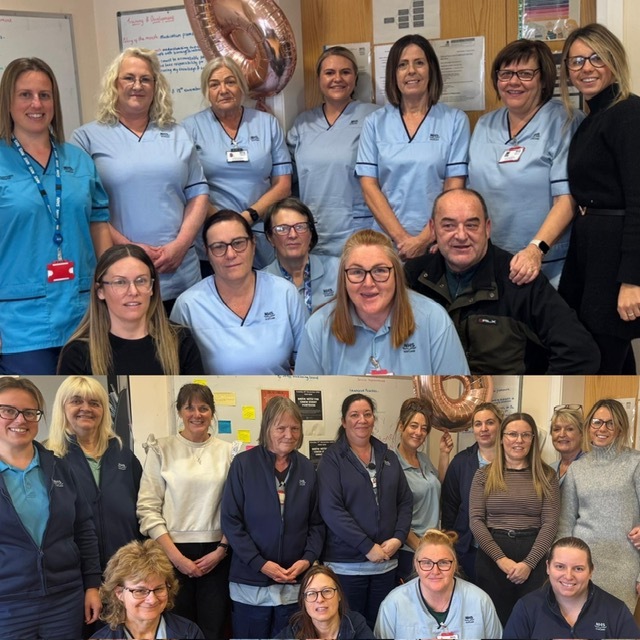
Dingwall care at home service celebrates success of hospital referral pilot project
Mid Ross care at home and enablement service in Dingwall was graded excellent for the quality of their staff team and how they support people’s wellbeing.
Inspectors highlighted the service's strong collaborative approach across its integrated teams, particularly the partnership between the discharge to assess team and enablement team.
Karen Crawford, integrated team manager for Mid Ross initiated the discharge to assess team as part of a pilot project. The primary aim was to achieve a 50% reduction in the time between receipt of referral and the commencement of care at home services for patients being discharged from hospital.
The pilot was implemented, evaluated, and refined using the Plan, Do, Study, Act (PDSA) approach to ensure continuous learning, measurable improvement, and effective service development.
The development of the discharge to assess team was fully embedded within the enablement team, with leadership and support from Emma MacArthur, care at home and enablement manager, and Lynsey Brown, advanced practice occupational therapist.
The team has worked together to drive innovation, maintain a focus on continuous improvement, and embrace new methodologies that enhance service delivery. Monthly meetings ensure the wider Care at Home team remains actively involved in decision-making processes and service reviews, promoting shared ownership, transparency and ongoing development.
This was the first discharge to assess team to be established locally. There were no existing services to benchmark against or learn from. This meant the team was responsible for designing, implementing and evaluating every aspect of the pilot independently. They consistently reflected on processes, responded to challenges as they arose and further developed the team’s knowledge and skill set to ensure ongoing improvement.
The team established a smooth pathway for people returning home from hospital and back into their communities. From the initial assessment through to the end of an individual's reablement journey, staff work closely with each person to support their recovery and help them achieve realistic, meaningful goals.
By carrying out assessments in people's own homes rather than hospital settings, the team has demonstrated a reduction in ongoing care needs. Assessing people in their home environment provides a more realistic understanding of their strengths, support networks and individual needs, leading to better long-term outcomes.
Feedback from independent care providers has expressed a high level of confidence in the team's assessments and commissioned visit times, recognising the robust monitoring and review processes in place.
As well as improving outcomes for individuals, this approach has helped reduce delayed hospital discharges and address unmet need within the community, ensuring support is provided where it is needed most.
Emma MacArthur, care at home and enablement manager, said: “We are proud of the excellent outcomes we have achieved. This is testament to the hard work and dedication of the team.”
Louise Quinn, discharge to access practitioner, said: “I have worked for the discharge to access team since June 2024. I feel honoured to be part of such a dedicated and accountable team. We are empowered with the autonomy to make real, meaningful differences in people’s lives, and that trust enables us to deliver truly person-centred care. The collaborative and supportive culture within the team motivates us to continually improve and strive for the best possible outcomes for the people we support.”
Teresa Da Forno, senior enablement worker, said: “I feel empowered by the training and support provided within the service, which gives me confidence to perform my role and deliver the highest standards of care. In my senior role, I have opportunities to support the discharge to assess team, develop skills, and share competencies across the team. This ensures adequate senior cover, clear guidance for enablement workers, and a strong awareness of each other’s roles. Together, we take collective responsibility to achieve the best outcomes for our patients.”
Stirling nursery children raise money for new woodland resources
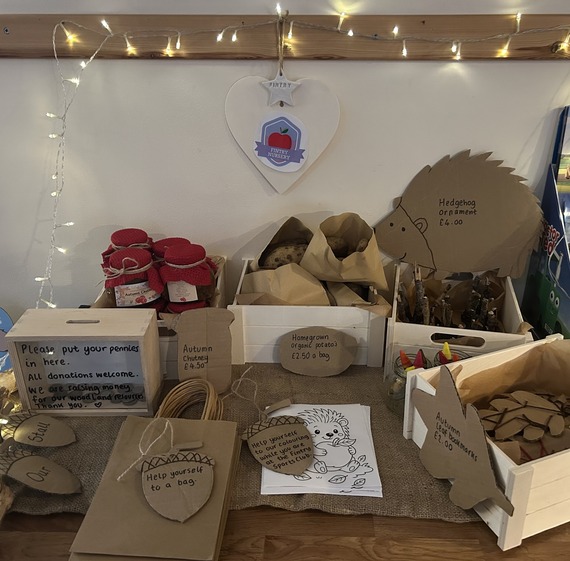
Children at Fintry Nursery in Stirling have raised money for new woodland resources by selling handmade goods in a pop-up shop.
During discussions about fundraising, the children decided they wanted to open a shop. This led to a partnership with Fintry Sports Club, which kindly offered space within its premises for the children to sell their creations to the local community.
The children were involved in every stage of the project. They cooked chutney, harvested potatoes they had grown themselves, created autumn bookmarks by threading leaves, and made hedgehog ornaments using sticks they had collected and counted.
One of the challenges the children faced was learning how to stay safe while visiting the local sports club. With support from SIMOA, they created their own risk assessment and learned how to identify and manage potential risks. This linked closely with the wellbeing buddies and the SHANARRI indicators, helping children understand the importance of keeping themselves and others safe.
The project strengthened links with the local community and highlighted the value of partnership working. The children gained experience of choosing products to sell, handling money and understanding its value. They also learned about their right to have a voice in decisions, including choosing which woodland resources to purchase with the money they raised.
Leonie French, senior early childhood educator, said: “I am so proud of our achievement and the learning we have achieved from this. It is an absolute privilege working in partnership with the local community.”
Mary Mcculloch, 73, from the community said: “it is lovely to buy handmade gifts from the children of Fintry. The homegrown food is delicious, what a community to live in".
Jordan Buchanan, parent, said: "I am happy that my son is getting to contribute to the fundraising for the nursery and involved the learning experiences that come with it”.
Children from nursery said: "SIMOA keeps us safe", "must use walking feet", "we want to get binoculars", "I picked the apples for the chutney" "my granny will buy this".
Go4Gold celebrates creativity, community and connection
Care homes across Perth and Kinross came together to celebrate Go4Gold, a long-running initiative that promotes wellbeing, creativity and social connection through themed activities and friendly competition.
This year's Under the Sea theme inspired residents and staff to take part in a wide range of activities, including creative artwork, costumes, games and team challenges. The programme also included live, in-person events, giving residents from different care homes the opportunity to come together, enjoy shared experiences and celebrate their achievements.
The initiative culminated in an awards ceremony, which premiered on 1 October, coinciding with the International Day of Older Persons.
The awards ceremony showcases the enthusiasm, creativity and community spirit demonstrated by participating care homes throughout the challenge and recognises the incredible efforts of residents, staff and volunteers.
Watch the awards ceremony here.
Care home improves pain management through PainChek
Rawyards House care home in Airdrie has shared a case study about using PainChek, an app specifically designed for people living with dementia who are unable to accurately describe their pain. The app analyses facial expressions alongside observations of body movements, vocalisations and behaviours to provide an objective pain assessment.
Read the full article here.
New shared learning resources from SSSC and PSDS to support individual care
We’ve teamed up with the SSSC and PSDS to highlight key learning resources that target common areas raised during scrutiny and inspection activities.
Our October feature focuses on Supporting Individuals, pulling together accessible training modules across five practice areas:
Our colleagues at SSSC recommend looking at their guidance on Nutrition and Dietetics that can help support people with their nutritional care.
Share and bookmark these links for your professional development.
Are you prepared for winter?
Winter brings an increased risk of respiratory infections and outbreaks in care settings, and an increase in coughs, colds, flu and other seasonal infections in early learning and childcare settings.
Changes to Transmission-Based Precautions (TBPs) guidance
As we enter the colder months, we are reminding care services about changes to guidance on Transmission-Based Precautions (TBPs) as part of the National Infection Prevention and Control Manual (NIPCM).
TBPs are the controls applied in addition to Standard Infection Control Precautions (SICPs) when supporting or providing care for a person with a known or suspected infection or colonisation.
The changes to guidance were introduced on 3 August 2026, followed by a six-month embedding period. They apply to all health and social care settings and are designed to ensure guidance reflects the latest evidence on how infections spread.
Find out what is changing here.
We have published information to help you prepare for winter in your settings:
Recent publications
Webinars and events
Stay up to date with all our webinars and events on our website. You can watch recordings of our webinars on YouTube.
Other news
The Knowledge Network value and impact survey
Do you use The Knowledge Network's eBooks, journals, databases, evidence summaries or medicines information resources? Tell us how these national resources support your work, learning and decision-making. The survey takes 10-15 mins to complete and closes 30 November 2026.
Complete The Knowledge Network value and impact survey
Enjoy this newsletter? Sign up for others!
As well as our Care News e-newsletter, we also send out vacancies updates, improvement updates and provider updates! You can select these as a topic of interest and change your preferences anytime here.
Find out more about our work at www.careinspectorate.scot
Contact us
|